Homemade beef carpaccio recipe: the method of a restaurateur
Homemade beef carpaccio recipe: a restaurateur’s method
« At my place, it never turns out the same way.» I hear this phrase at least once a week, often at the time of the check, often said in a low voice as an admission. Carpaccio seems to be the simplest recipe in the world: raw beef, oil, parmesan. It’s precisely because there’s nothing to hide that everything is visible. Here is the Homemade recipe for beef carpaccio as we practice it every service, with the details that really make the difference.
A recipe born of a medical prescription
In 1950, at Harry’s Bar in Venice, A regular customer tells Giuseppe Cipriani that her doctor forbids her from eating cooked meat. Cipriani slices the raw beef into slices, douses it with a clear sauce and names the dish after Vittore Carpaccio, a Venetian painter whose retrospective was currently touring the city — a painter obsessed with deep reds.
The carpaccio was therefore born from a constraint. Like many great dishes. And like our own Halal requirement: a constraint that drives us to do better, not less.
Step 1 — The meat, and nothing else
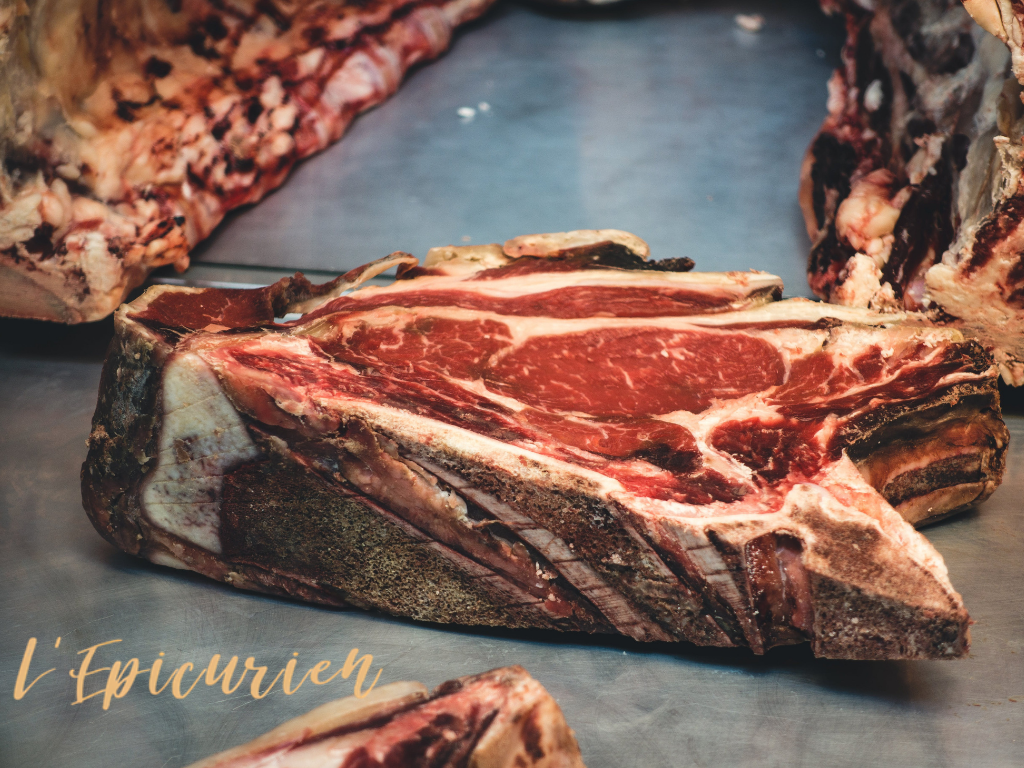
Get some filet. Not the «good enough» type of filet, not the cuts. The filet is a muscle that hardly works: tight grain, almost no nerves, a bright cherry red color. In our case, it’s Charolais filet, supplied by Adam, our butcher since the restaurant opened.
Order a prepared dish: all the surface fat and membranes must be removed. On a carpaccio, an forgotten membrane transforms into an elastic one. And buy it the same day. Raw meat never tolerates any approximation of freshness.
Step 2 — The cold, your only true knife
Here is the secret that no one tells you: you don't cut a tender piece of meat. Film the fillet tightly, like a well-stretched dumpling, and place it in the freezer for twenty to thirty minutes. It should become firm to the touch without being frozen to the core.
Next, a long knife, fine blade, perfectly sharpened, and a gesture directed towards oneself — never a saw. You’re looking for almost translucent slices: placed on the plate, you have to guess the porcelain through them. If your blade sticks, it means the meat is still too tender or your knife too blunt.
Step 3 — The seasoning, in the correct order
Order matters as much as the products. First arrange the slices flat, without overlapping them. Then the olive oil: a slightly spicy Tuscan variety that leaves that burning sensation in the back of your throat. It forms a protective film that prevents the meat from oxidizing and browning.
Only then, the salt — from the flower Guérande salt, In whole crystals, placed by hand. Salt is too early and the salt draws the water out: you will get a rosy puddle at the bottom of the plate.
Then the flakes of Parmigiano Reggiano DOP, Aged for 24 months. Made with a blend of grains, these large, irregular pieces of parmesan crumble when you bite into them; a chunk of parmesan crumbles and releases its tyrosine crystals.
Finally, the wild rocket — bitterer and more nervy than the cultivated rocket — a few capers, a turn of the mill. And a lemon fillet, only at the time of serving: the «cooked» acid “cooks” the surface of the meat if it is placed too early.
The four mistakes that kill a carpaccio
Cutting too thick. Beyond two millimeters, it’s no longer carpaccio; it’s just flat tartare.
Prepare in advance. Thirty minutes in the fridge is enough to brown the edges. The carpaccio is ready in a minute — that’s actually why our à la carte menu works: we cut off the pieces at each request; there’s no waiting time.
Serve chilled. Meat that has been out of the cold has a metallic taste. Leave the plate at room temperature for ten minutes before serving it.
Put too much in. Oil, salt, lemon, parmesan: everyone must remain identifiable. Beef remains the star dish.
What you won't be able to reproduce at home
The beef carpaccio served at L’Épicurien is made with French beef and is available as an unlimited option at every service. All meat served at the restaurant is halal-certified. L’Épicurien does not serve aged meat.
To enjoy it in a restaurant, discover our Carpaccio à volonté in Strasbourg and check Current formulas and rates.
Can we use a different piece other than the net?
The well-prepared rumsteck can work, but it requires even finer cutting. The net remains the sure choice.
How long does a prepared carpaccio keep for?
It doesn’t keep. It stands up and eats itself. It’s a last-minute recipe by nature.
Where can you try carpaccio to your heart's content in Strasbourg?
At 9 rue de Berne, near Gutenberg Square. The menu is varied, with a choice of cuts of Charolais steak ordered on the spot.
Make it at home: you’ll understand better what you’re eating here. It’s the best way to love a dish — to know what it requires. And on the night when you don’t feel like taking out the knife and the freezer, book your table and let us decide for you.
Warning: The information in this article is provided for informational purposes and is based on referenced culinary traditions. It does not replace personalized medical or nutritional advice. In case of allergies or specific dietary restrictions, consult a healthcare professional before consumption.